
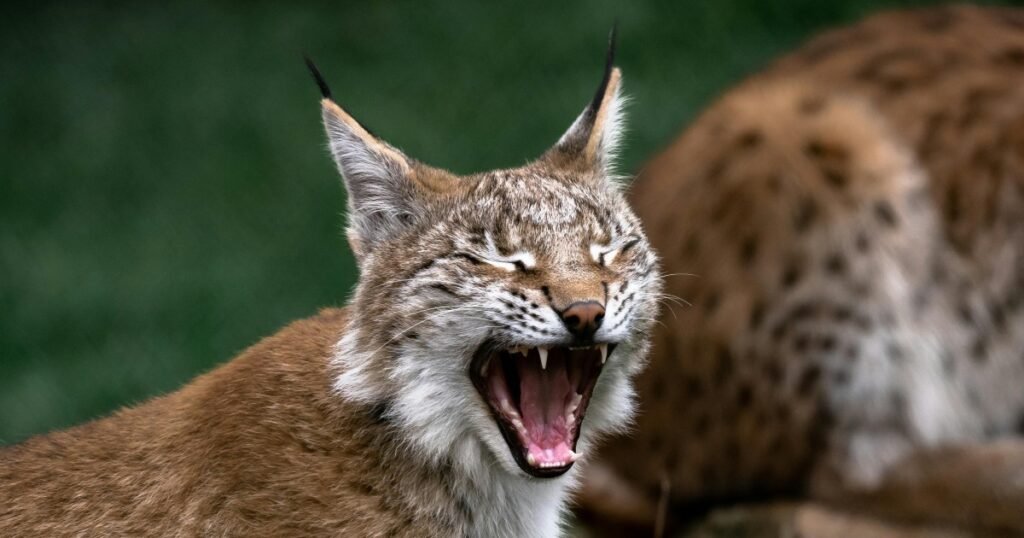
Source footage credits for every clip in this video are listed in full in the video description on YouTube.
Most people who look up bobcat sounds are trying to identify one specific noise: something that screamed in the dark and sounded uncomfortably like a person. That sound is real, and this page will help you place it. But it is worth saying at the outset that it is also the least typical thing a bobcat does.
Bobcats are solitary and, by the standards of wild animals, remarkably quiet. Indiana’s Department of Natural Resources puts it flatly: bobcat vocalizations are rarely heard by people. When researchers set motion-triggered cameras at bobcat communication sites to study how they signal to one another, scent marking dominated almost everything they recorded, and vocalizations turned up only as an occasional, cryptic extra. Most bobcat communication is chemical. What you hear is the small audible fraction of it.
That also means bobcat vocal behaviour is genuinely understudied compared with, say, wolves or coyotes. A lot of what circulates online is confident well beyond the evidence. Where a claim below rests on research into other cats rather than bobcats specifically, this article says so.
The nine sounds below fall into three natural groups: close-range friendly calls (purr, chirp, meow), defensive and threat calls (growl, hiss, snarl), and long-range breeding calls (yowl, scream, caterwaul). Click any button to jump straight to that sound in the video.
All 9 Bobcat Sounds At A Glance
| Sound | Group | What it usually means | Listen |
|---|---|---|---|
| Purr | Close range | Relaxed contact, most often between a mother and kittens | |
| Chirp | Close range | Short contact call, mother to kittens or kittens answering | |
| Meow | Close range | General close contact — harsher and longer than a house cat’s | |
| Growl | Threat | Low warning: back off before this escalates | |
| Hiss | Threat | Defensive, not offensive — the animal wants distance | |
| Snarl | Threat | Escalation, usually with teeth bared and a real fight close | |
| Yowl | Breeding | Long-range advertisement during the winter breeding season | |
| Scream | Breeding | The famous one — high, harsh, and easily mistaken for a person | |
| Caterwaul | Breeding | Prolonged wavering exchange between two animals at close quarters |
Contents:
1. The Bobcat Purr
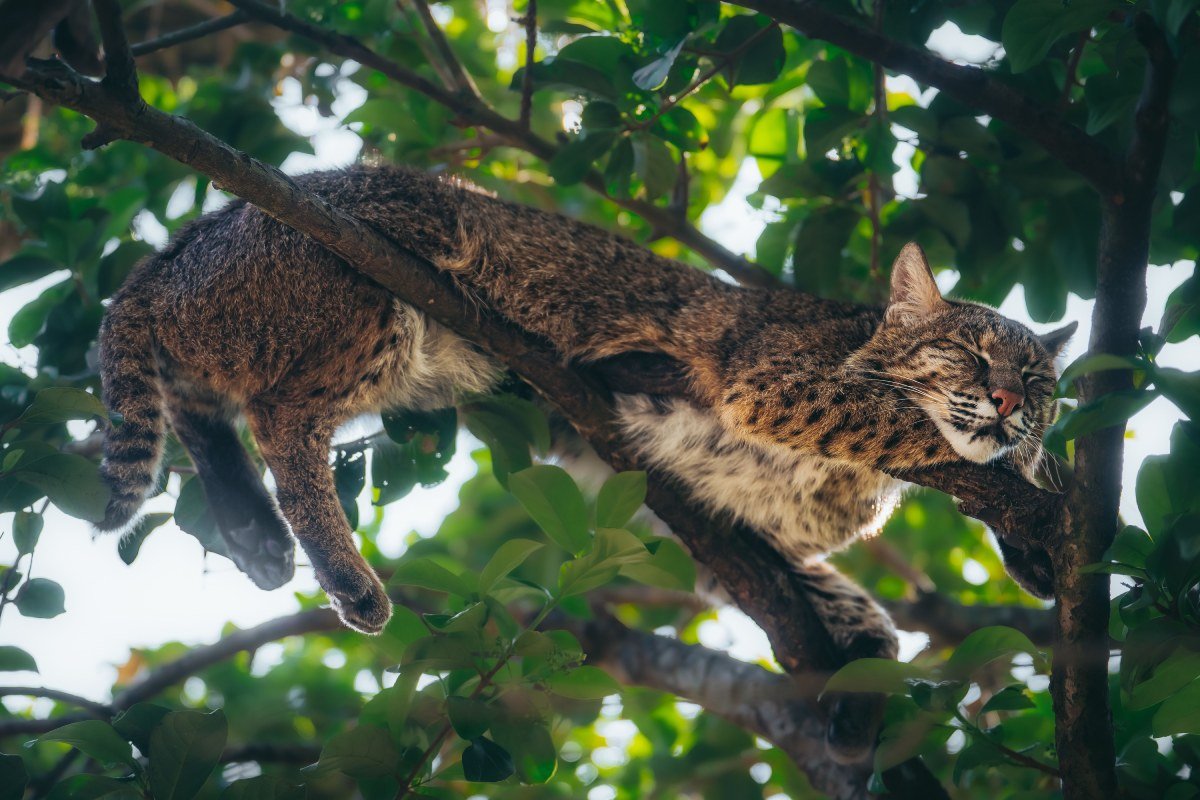
Yes, bobcats purr. They sit in the subfamily Felinae, the branch of the cat family that purrs, and they appear on the list of confirmed purring species in Gustav Peters’ review of purring across mammals. What they cannot do is roar — no cat does both.
The feature that actually separates a purr from every other sound on this page is mechanical. As the Library of Congress puts it, the purr is produced continuously through the whole respiratory cycle, on the inbreath and the outbreath alike, whereas a meow only happens on the way out. If a sound continues unbroken across breaths, it is a purr.
The hyoid myth. Nearly every page on this subject repeats that cats with a fully ossified hyoid bone purr, and cats with a flexible one roar. It is a tidy story and it is not really right. Anatomists have argued for years that hyoid ossification does not by itself determine whether a cat can roar or purr — the structure of the vocal folds matters more. The snow leopard settles it: it has the flexible hyoid of the roaring cats, and can neither roar nor truly purr.
Still being rewritten. For decades the accepted explanation was that purring requires continuous cyclical signals from the brain to the laryngeal muscles. In 2023 a team showed that isolated domestic cat larynges could produce purr-range frequencies with no neural input at all, pointing to a passive aerodynamic mechanism. That work was done on domestic cats, and how it applies to bobcats has not been tested.
One more caution on interpretation: “purring means contentment” is a simplification even in house cats, which also purr when injured or stressed. In bobcats, purring is reported mainly between mothers and kittens and in relaxed captive animals — so contentment is a fair reading most of the time, but not a rule.
2. The Bobcat Chirp
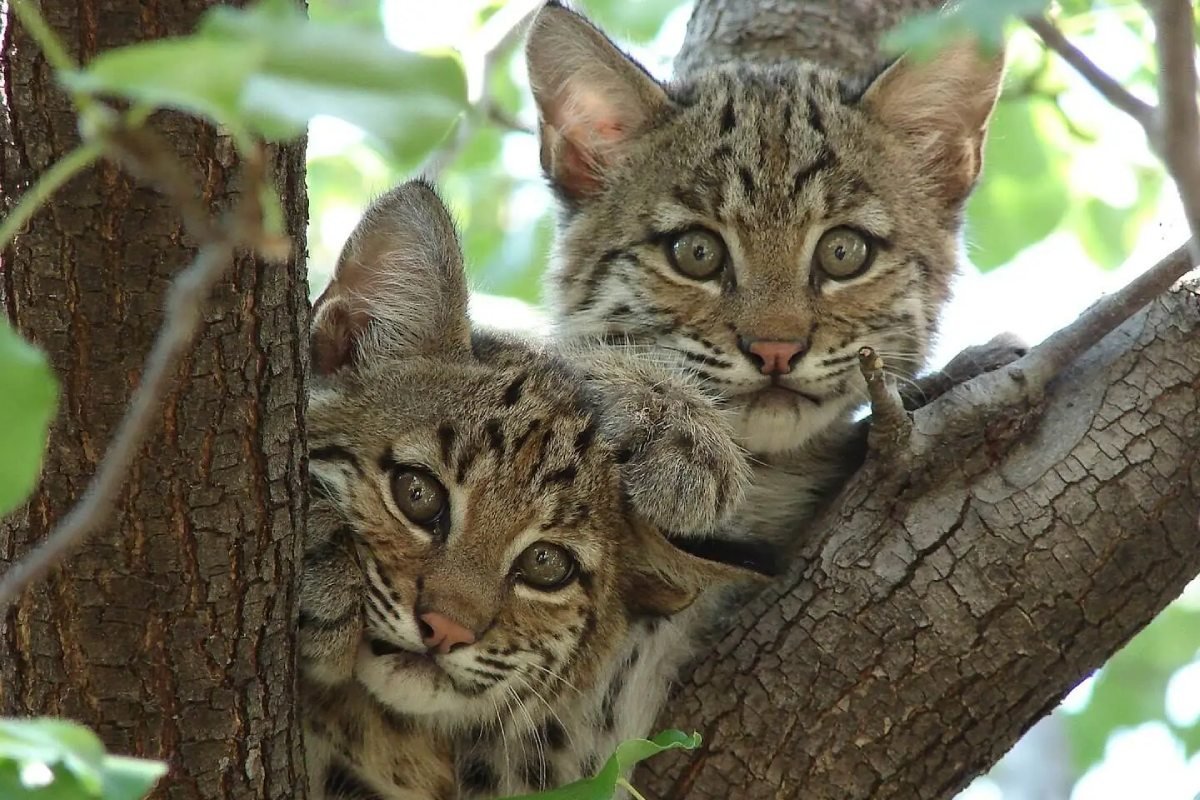
A chirp is short, abrupt and oddly birdlike — the last thing most people expect from a predator this size. Across the cat family it is a close-range contact call, used mainly between a mother and her kittens: she chirps to summon them, they chirp back to locate her.
Cats also chirp and chatter at prey they can see but cannot reach — the behaviour any house cat performs at a window full of birds. Why they do it is still open. Suggestions range from involuntary excitement to frustration to a mimicry of prey calls, and none of them has been convincingly demonstrated.
Thinnest evidence on this page. The chirp is the least documented bobcat call. Almost everything written about it, including the paragraphs above, is extrapolated from domestic cats and captive lynx rather than measured in wild bobcats.
3. The Bobcat Meow
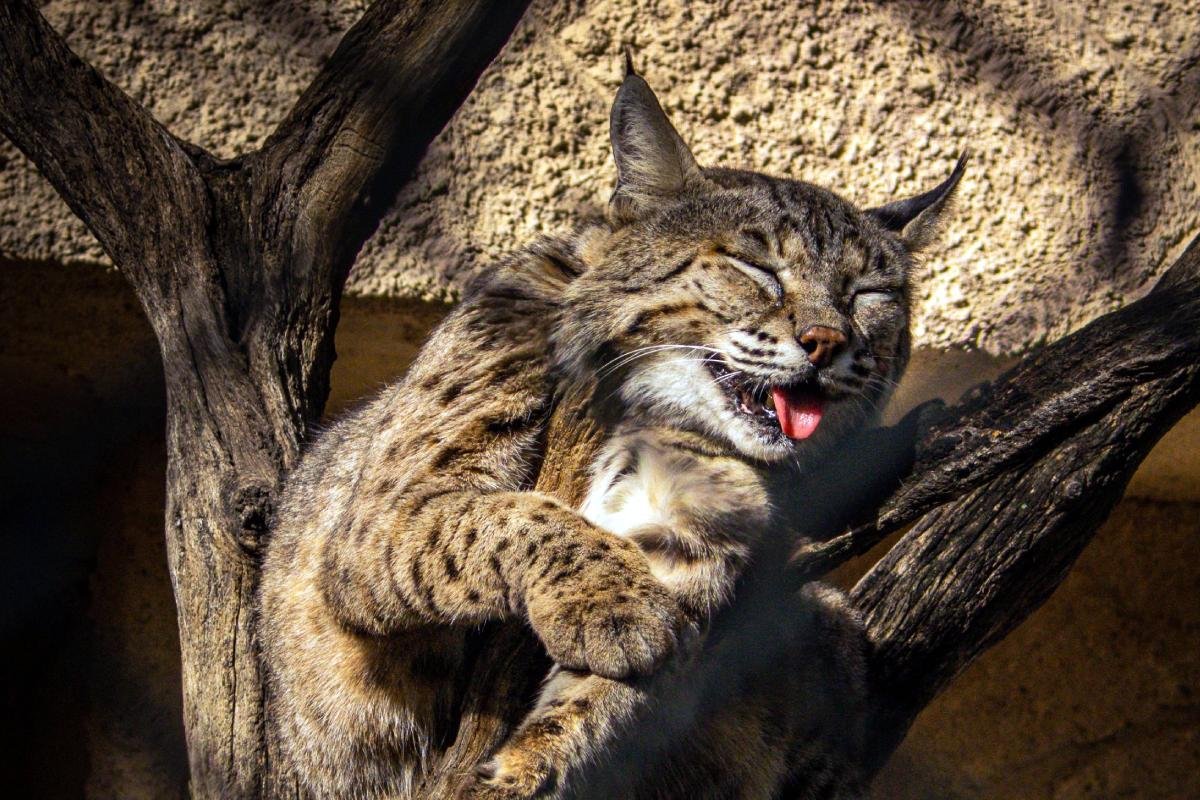
A bobcat meow is immediately recognisable as a cat and immediately wrong. It is longer, lower, rougher and somehow less appealing than the sound your house cat makes. There is a good reason for that, and it is one of the more interesting findings in animal communication.
Nicholas Nicastro compared the meows of domestic cats with those of the African wildcat, their closest wild relative. Domestic meows were shorter, higher in pitch and higher in formant frequency — and human listeners, whether or not they liked cats, rated them as far more pleasant. The interpretation is that domestication selected the meow toward what people find agreeable.
The meow is mostly aimed at us. Adult wild cats meow comparatively little; it is largely a kitten call. Domestic cats kept it into adulthood and redirected it at humans. So the reason a bobcat meow sounds unsettling is not that the bobcat is doing something strange — it is that we spent thousands of years breeding the strangeness out of the version we live with.
A 2025 analysis added a further wrinkle: purrs identify an individual cat far more reliably than meows do, and domestic cat meows vary more widely than those of wild relatives including the cougar and the cheetah. The meow is the flexible, learned-sounding call. The purr is closer to a signature.
In bobcats, expect the meow at close range only: mothers with kittens, or a pair during the breeding season. If you can hear one clearly, you are very close.
4. The Bobcat Growl
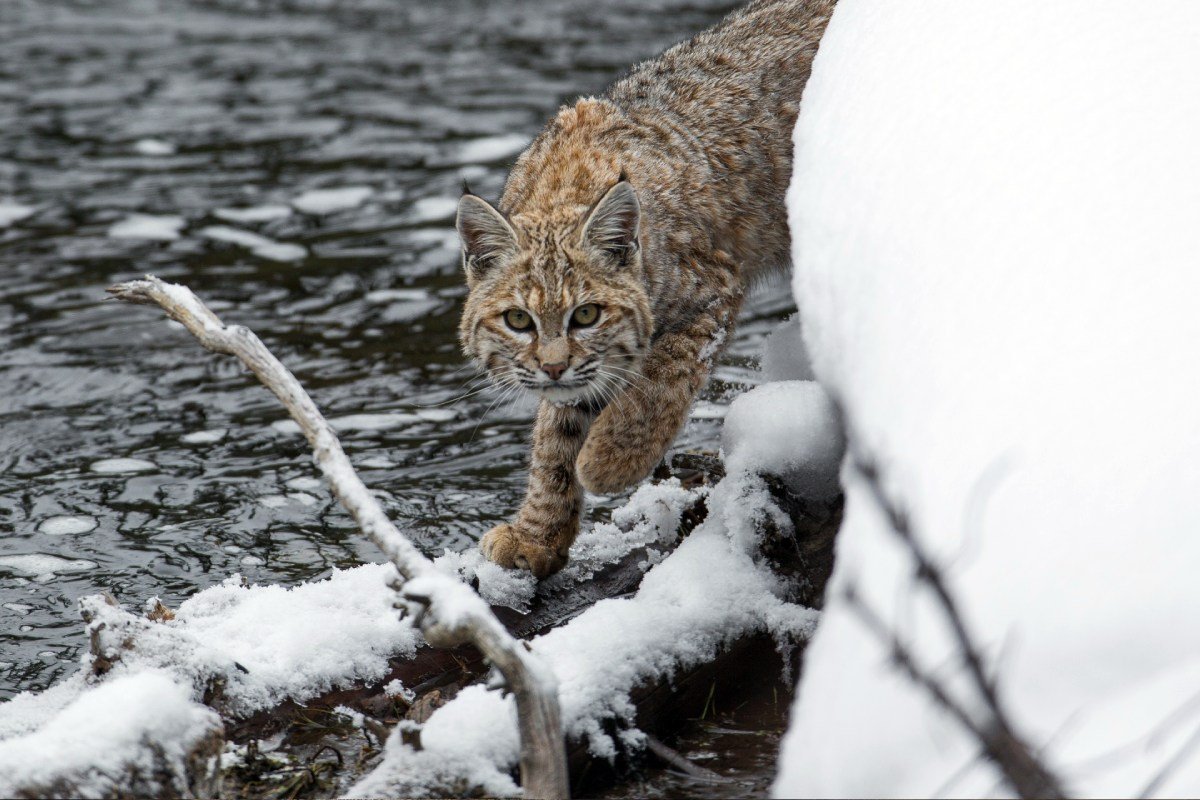
The growl is a low, rolling, sustained warning delivered at very short range. It carries almost no distance, which is the point: it is meant for one recipient standing right there, and it is a request to stop before anything else happens.
It is worth treating the next three sounds as one system rather than three separate words. Growl, hiss and snarl form an intensity ladder — a graded sequence where the animal escalates as the situation deteriorates. A growl is the bottom rung. A snarl with the teeth exposed is near the top. Where exactly one ends and the next begins is a matter of description, not of biology.
You are most likely to trigger one by cornering an animal, approaching kittens, or coming near something a bobcat is eating. In every case the useful response is the same: give it a clear route away from you and take it yourself.
5. The Bobcat Hiss
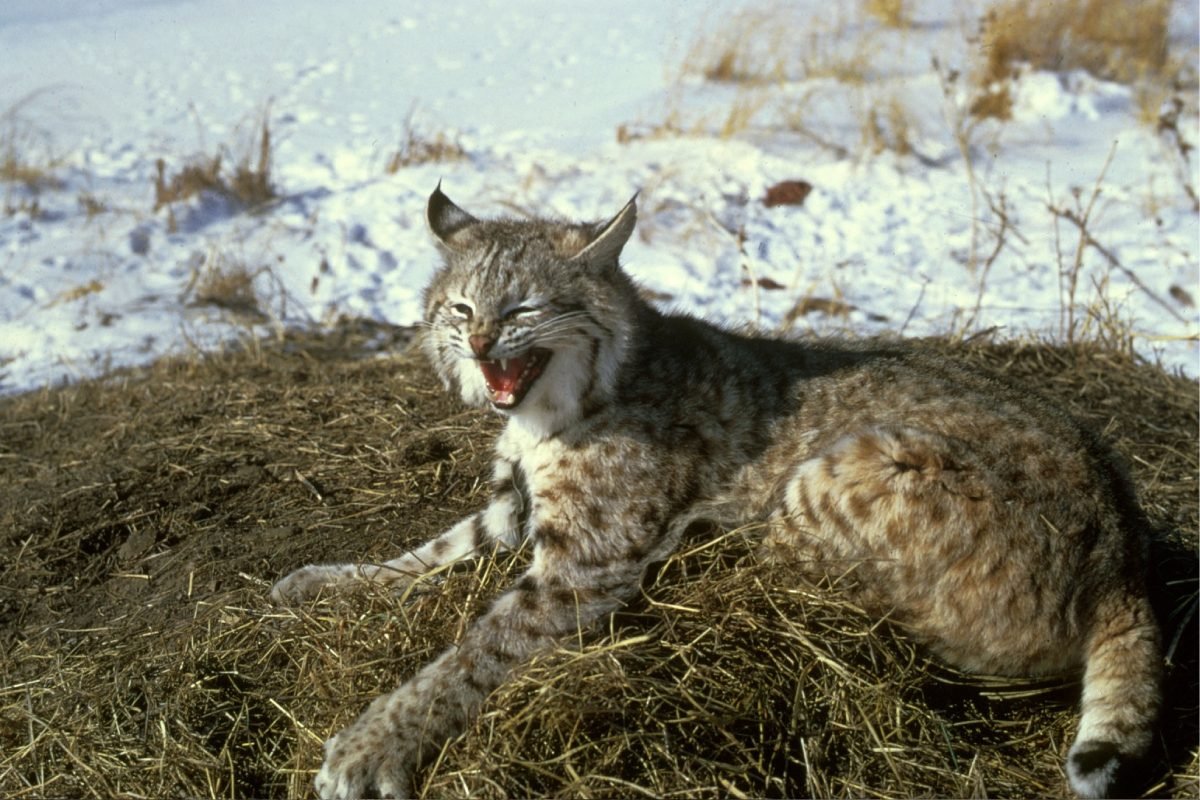
A hiss is a sharp, forceful expulsion of air. Unlike a growl or a yowl it has no tonal structure at all — it is broadband noise, closer to static than to a note. That is why it cuts through other sounds so effectively at close range.
The most useful thing to understand about a hiss is that it is defensive, not offensive. It is produced by an animal that feels trapped and would strongly prefer you to leave. A hissing bobcat is not building up to an attack; it is telling you it has run out of other options. The accompanying posture usually confirms it — ears flattened back, body low, weight shifted away from you rather than toward you.
The snake hypothesis. You will often read that the feline hiss evolved to mimic a snake and exploit an innate fear of them. It is a genuinely interesting idea and it may well be true. It is also, as far as we can establish, untested — there is no direct experimental evidence for it in cats. Treat it as a hypothesis that has been repeated often enough to sound like a finding.
6. The Bobcat Snarl
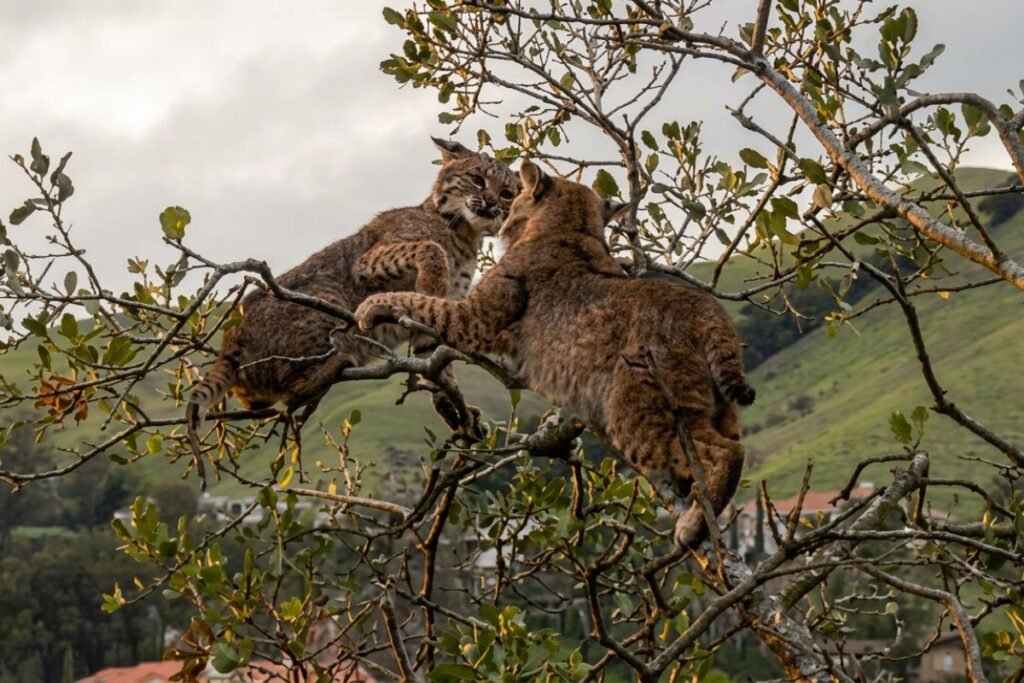
A snarl is a growl that has acquired a face. The lips draw back off the teeth, the sound roughens, and the whole thing becomes a combined visual and acoustic display — which is why “snarl” is really a description of the animal as much as of the noise.
This is where the ladder gets serious. Snarling turns up in genuine conflicts: disputes over a carcass, a defended den, and above all territorial confrontations between males during the winter breeding season, when animals that normally avoid each other are forced into contact.
Why solitary animals shout so much. Bobcats have no pack to fall back on and no reinforcements. An injury that a social predator might survive can be fatal to an animal that hunts alone. The entire growl-hiss-snarl sequence exists to settle disputes without contact, because for a bobcat an actual fight is a bad outcome even when it wins.
7. The Bobcat Yowl
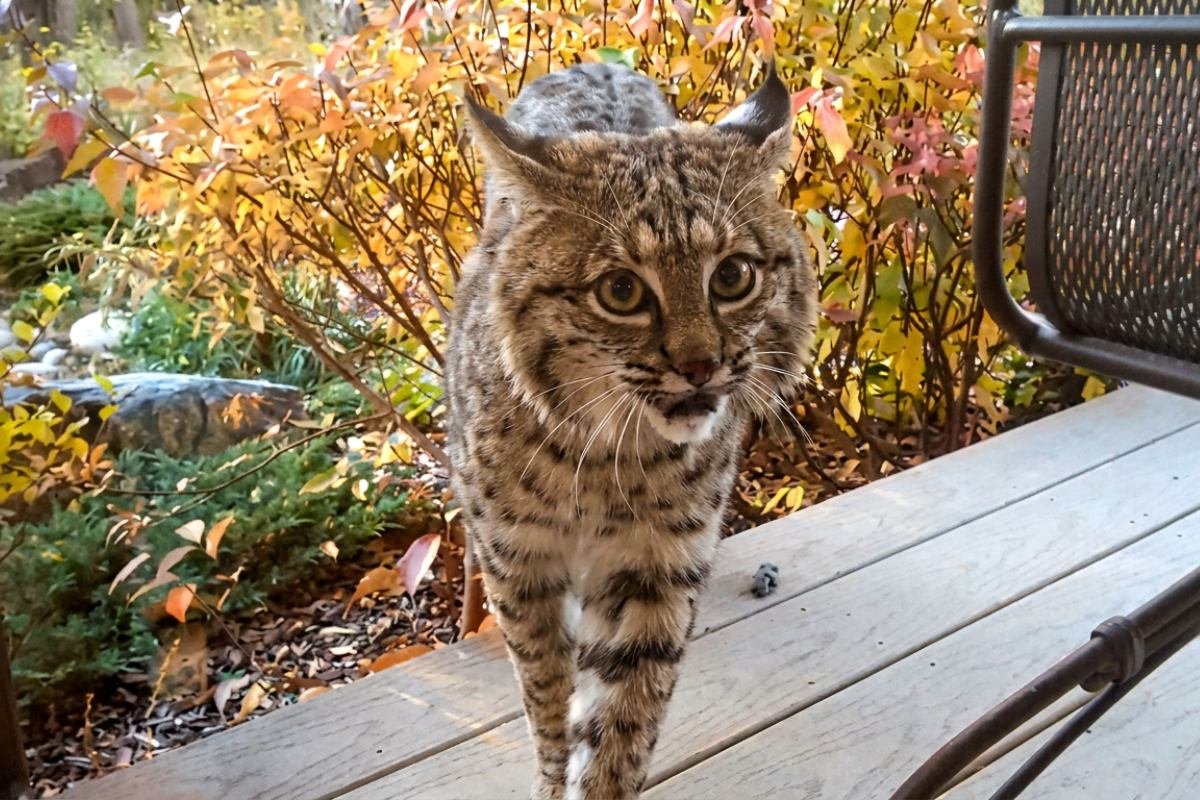
A yowl is long, loud and drawn out, and it is built to travel. Both sexes produce it through the winter breeding season: females advertising receptivity, males announcing presence and status to rivals and potential mates alike.
This is the sound that solves a real problem. A solitary, widely spaced, largely nocturnal animal has to locate a mate across a home range that may run to dozens of square miles, and it has no group to coordinate with. Most of that work is done by scent — the camera-trap study of bobcat communication sites found olfactory investigation to be more common than any other communication behaviour, with visits peaking in January at the height of courtship. The yowl is the part of that system you can actually hear.
Yowl, scream, caterwaul. These three names describe overlapping points on one continuum of loud breeding-season calls, and different sources draw the lines in different places. This article uses the common convention — yowl for a single sustained call, scream for the short high-intensity burst, caterwaul for a prolonged exchange between two animals — but the boundaries are conventional rather than established.
8. The Bobcat Scream
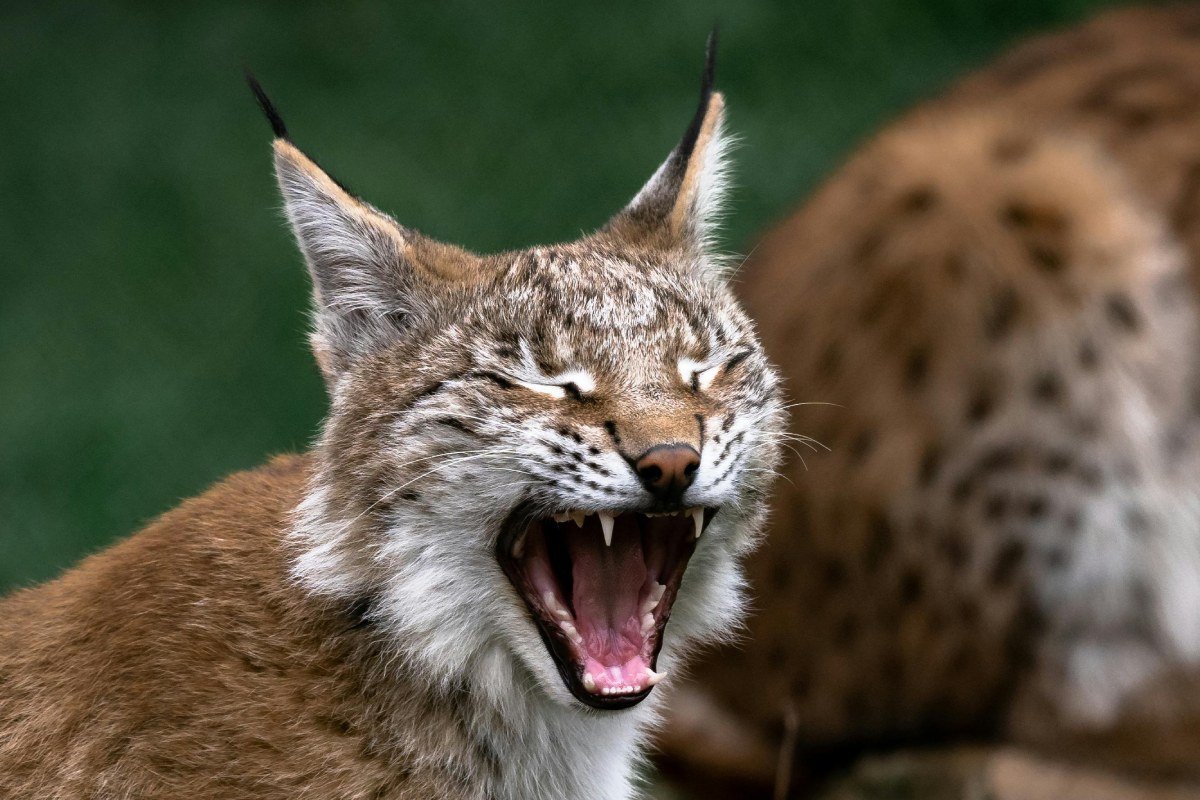
This is the one. Short, harsh, piercing, and described by almost everyone who hears it as sounding like a woman screaming. People have called emergency services over it. The comparison is not an exaggeration, and it is not a coincidence either.
The scream lands in roughly the same pitch range as a human distress cry, and it carries the same rough, strained quality that our hearing is unusually sensitive to. Human auditory perception is tuned to prioritise exactly those features. We are not mistaking the sound so much as our alarm response is doing precisely what it evolved to do, with the wrong species.
Functionally it belongs to the breeding-season group, produced during courtship and in confrontations between rivals. It is not a hunting sound, and it is not a sign that something is being killed nearby.
It probably wasn’t a bobcat. Bobcat screams are far rarer than the internet suggests — Indiana’s DNR notes that bobcat vocalizations are seldom heard by people at all. A single scream in the night is more often a red fox. See the comparison below before you settle on an answer.
9. The Bobcat Caterwaul
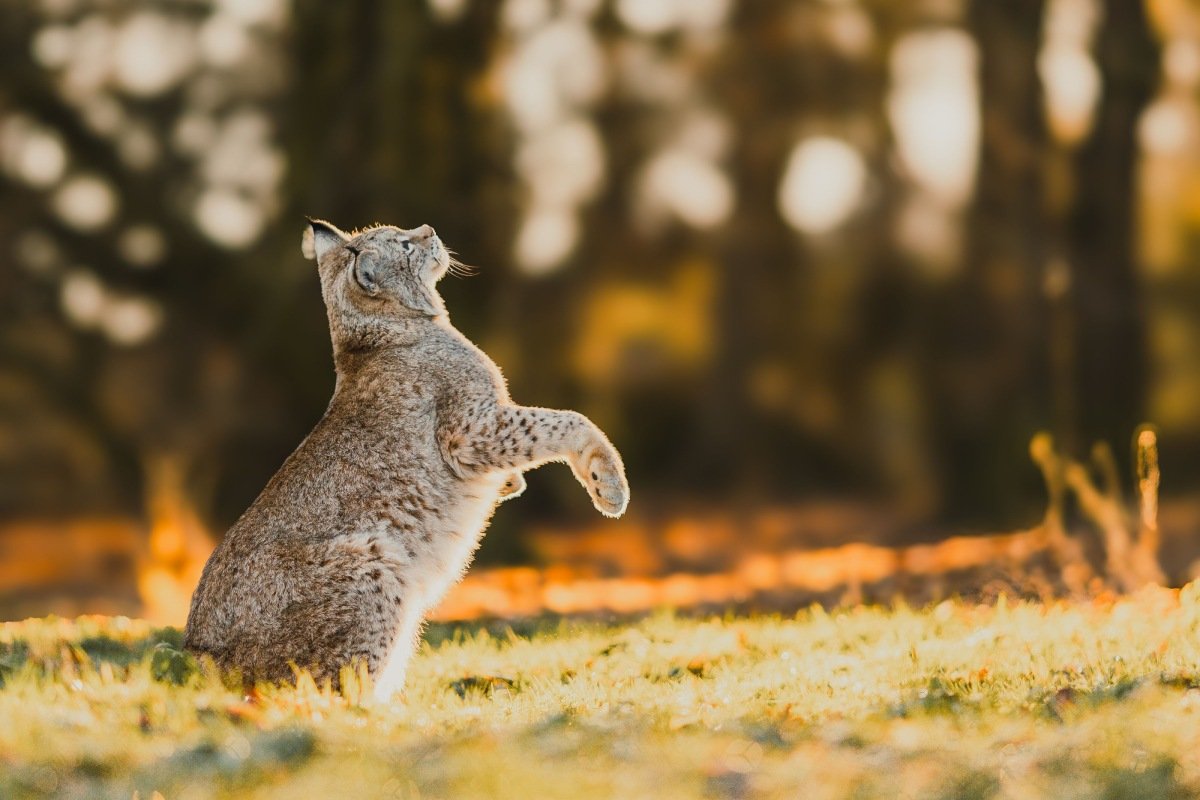
The caterwaul is the full performance: a long, wavering, rising and falling call that can run on for some time and is usually an exchange rather than a solo. Two animals trade it back and forth — a courting pair, or two males who have found themselves in the same place at the wrong time of year.
If you have ever heard neighbourhood cats going at it on a wall at 3am, you already know the shape of it. A bobcat caterwaul is the same behaviour with considerably more power behind it, and it is the single loudest thing this animal does.
Because it is tied so tightly to courtship, the caterwaul is strongly seasonal. Virginia’s Department of Wildlife Resources gives the breeding season as early January through March, and Indiana’s DNR reports that the bulk of mating happens in February and March. If you are hearing this in late winter, that is exactly when you should be.
Bobcat, Fox, Coyote or Mountain Lion?
Night screams are the most misidentified sounds in North America. Here is what separates the usual suspects.
| Animal | What gives it away |
|---|---|
| Bobcat | Long, wavering, rising and falling. Often an exchange between two animals rather than a single call. Heavily concentrated in January to March. |
| Red fox | Hoarse, short, and repeated at regular intervals with gaps between. The most common false positive by a wide margin — if it was one abrupt scream repeated a few times, start here. |
| Coyote | A chorus. Multiple overlapping voices mixing howls, yips and barks, shifting rapidly. If you heard more than one animal answering, it is almost certainly this. |
| Mountain lion | Genuinely rare, and reported far more often than it occurs. Over most of the bobcat’s range cougars are absent or scarce, so this should be your last guess, not your first. |
| Fisher | The “fisher cat scream” is largely a myth. Fishers are comparatively quiet, and most recordings circulating under that name are more consistent with foxes. |
The quickest test is whether anything answered. Bobcats are solitary, so a bobcat event is usually one animal or two in dialogue. Coyotes answer each other in numbers — if you heard a crowd, read our guide to coyote sounds and what they mean instead.
When Are Bobcats Loudest?
Bobcat vocal activity is dramatically seasonal, and almost all of it falls in one window. Breeding runs from roughly January into March, with mating concentrated in February and March. Gestation is around 62 days, so kittens arrive in April and May — which is when defensive calls near a den become more likely, even though the loud breeding calls have stopped.
The camera-trap work at bobcat communication sites found visits peaking in January and becoming more strongly nocturnal through winter and spring. For the remaining half of the year, bobcats are close to silent as far as human ears are concerned. If you are hearing screaming in July, the odds shift sharply toward a fox.
Frequently Asked Questions
Do bobcats really sound like a woman screaming?
Yes. The bobcat scream falls into a similar pitch range to a human distress cry and shares its harsh, strained quality — features human hearing is specifically tuned to react to. The resemblance is real, though a single scream in the night is more often a red fox.
Do bobcats purr?
Yes. Bobcats belong to the purring branch of the cat family and appear among the confirmed purring species. Like all purring cats they cannot roar — no cat does both. The purr is also the only bobcat sound produced continuously across the whole breathing cycle rather than only on the outbreath.
Was that a bobcat or a fox screaming?
A red fox scream is hoarse, short and repeated at intervals with clear gaps. A bobcat call is longer, wavering, and rises and falls, often traded back and forth between two animals. Season helps too: bobcat calls cluster in January to March, while foxes call across a wider part of the year.
Why is a bobcat screaming near my house?
Almost always because it is the breeding season and your property falls within a bobcat’s range or along a travel route. Screaming and caterwauling are courtship and rival-confrontation calls, not hunting sounds, and they are not evidence that anything is being killed nearby.
Are bobcat sounds a sign of danger?
Hearing a scream or caterwaul indicates presence, not threat. The calls actually directed at you are the close-range ones — growling, hissing and snarling — and those come from an animal that feels cornered or is guarding kittens or food. The appropriate response is to give it an unobstructed route away from you.
What time of year are bobcats loudest?
Late winter. Breeding runs from about January to March with mating concentrated in February and March, and that is when yowling, screaming and caterwauling peak. Kittens are born in April and May, so defensive calls near dens become more likely then. Through summer and autumn bobcats are largely silent to human ears.
Why do bobcats sound so different from house cats?
Partly size, and partly us. Research comparing domestic cats with their closest wild relative found domestic meows to be shorter and higher pitched, and human listeners consistently rated them as more pleasant — evidence that domestication shaped the meow toward human preference. A bobcat is producing the unmodified version.
Sources
- Peters, G. (2002). Purring and similar vocalizations in mammals. Mammal Review, 32(4), 245–271.
- Weissengruber, G. E., Forstenpointner, G., Peters, G., Kübber-Heiss, A., & Fitch, W. T. (2002). Hyoid apparatus and pharynx in the lion, jaguar, tiger, cheetah and domestic cat. Journal of Anatomy, 201(3), 195–209.
- Sissom, D. E. F., Rice, D. A., & Peters, G. (1991). How cats purr. Journal of Zoology, 223(1), 67–78.
- Herbst, C. T., et al. (2023). Domestic cat larynges can produce purring frequencies without neural input. Current Biology.
- Nicastro, N. (2004). Perceptual and acoustic evidence for species-level differences in meow vocalizations by domestic cats and African wild cats. Journal of Comparative Psychology, 118(3), 287–296.
- (2025). Meows encode less individual information than purrs and show greater variability in domestic than in wild cats. Scientific Reports.
- Allen, M. L., Wallace, C. F., & Wilmers, C. C. (2015). Patterns in bobcat (Lynx rufus) scent marking and communication behaviors. Journal of Ethology, 33, 9–14.
- Virginia Department of Wildlife Resources. Bobcat species profile.
- Indiana Department of Natural Resources. Bobcats.
- Library of Congress. Why and how do cats purr?
Bobcat vocal behaviour is poorly studied relative to other North American predators. Where a claim above rests on research into domestic cats or other felids rather than on bobcats directly, that is stated in the text — see the notes in the purr, chirp, hiss and yowl sections.