
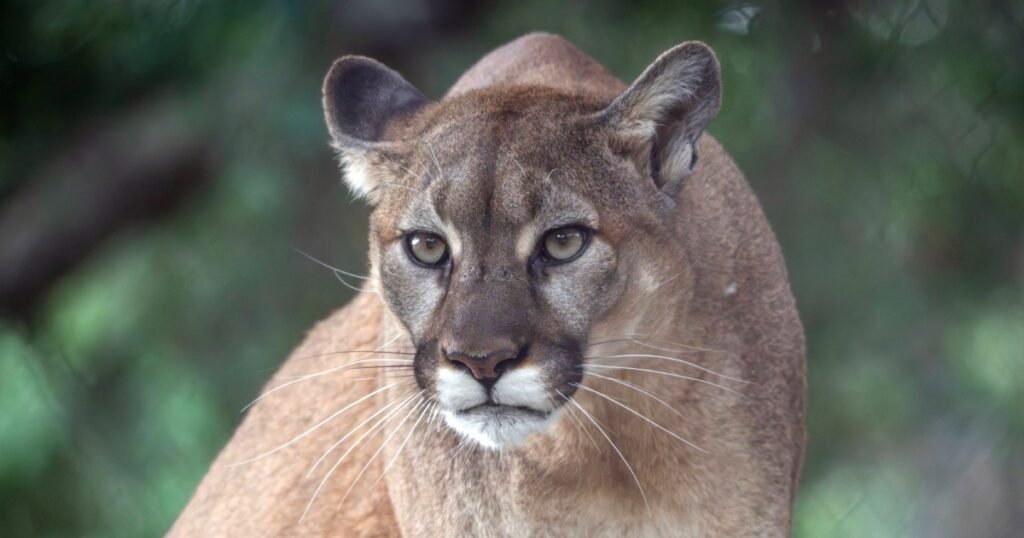
Source footage credits for every clip in this video are listed in full in the video description on YouTube.
Almost everything most people believe about the sound a mountain lion makes comes from film. The scream is real — you can hear it below — but it is nowhere near the animal’s most typical call, and it is not the reason most encounters go unnoticed. The reason for that is stranger: a large part of the mountain lion’s vocal repertoire sounds like a bird.
The San Diego Zoo puts the correction plainly: despite how often the “wild cat scream” turns up on screen, mountain lions do not make it very often. Whistles, squeaks, growls, purrs, hisses and yowls are all more common. The scream is the exception, not the signature.
A note on names before we start: mountain lion, cougar, puma, panther and catamount all refer to the same animal, Puma concolor. It holds a record for the most common names of any mammal, which is a reasonable clue to how widely it once ranged.
Below are the seven mountain lion sounds from the video, each with the audio attached. One of them — the whistle — is a call almost no other North American animal produces, and it is the single most reliable way to know you have heard a mountain lion rather than something else.
All 7 Mountain Lion Sounds At A Glance
| Sound | What it usually means | How common | Listen |
|---|---|---|---|
| Purr | Relaxed contact, mostly mothers with nursing cubs | Common, but quiet and short-range | |
| Chirp | Short bird-like contact call between family members | Common — and routinely mistaken for a bird | |
| Whistle | Long-range contact and alarm, mother to offspring | The most diagnostic sound on this list | |
| Meow | Close-range greeting — recognisably cat, noticeably deeper | Common at close quarters | |
| Growl | Close-range warning over territory, a kill, or cubs | Uncommon; you have to be close | |
| Hiss | Defensive threat from a cornered or cub-guarding animal | Uncommon | |
| Scream | Mating advertisement, mostly by females | Rare — far rarer than films suggest |
Contents:
1. The Mountain Lion Purr
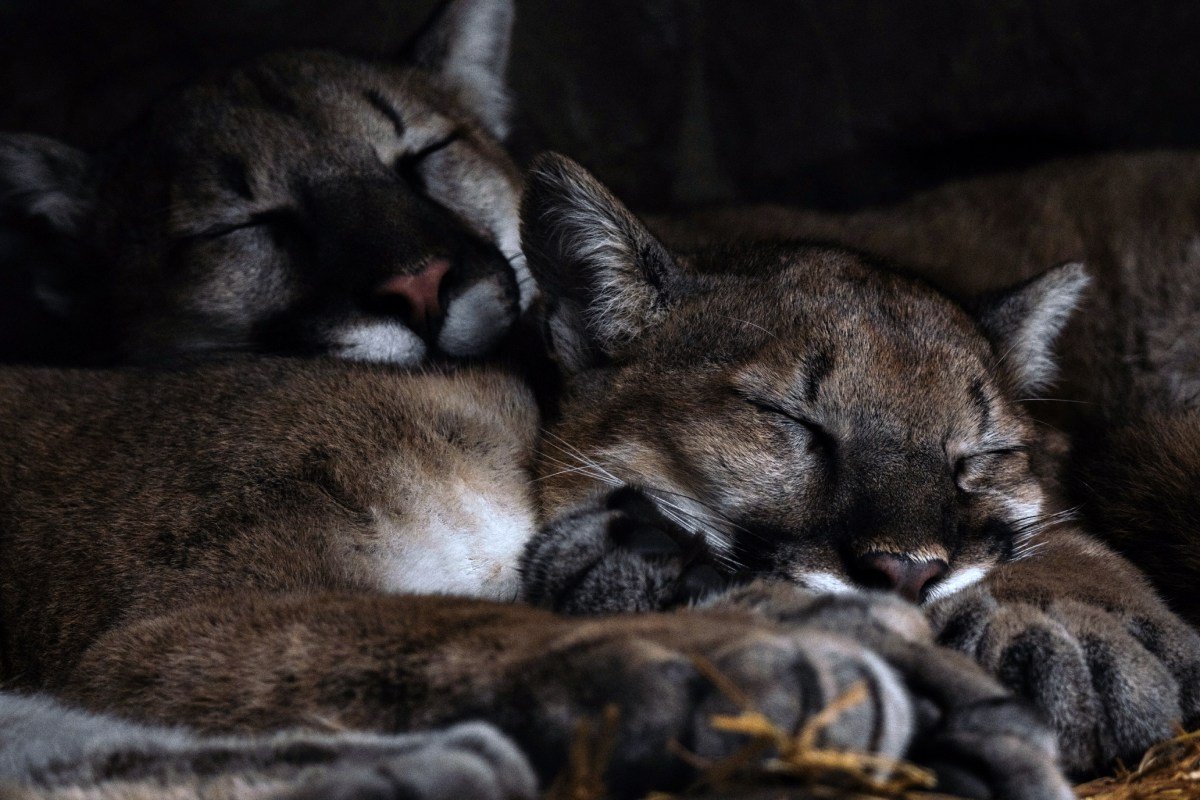
A mountain lion can weigh as much as an adult human and it purrs like a house cat. It is the largest cat that does, and the reason is a genuine either/or in feline evolution: cats either roar or purr, and no species manages both. Despite its size, Puma concolor sits with the purring cats — more closely related to the cheetah than to lions or tigers.
The purr is also mechanically distinct from everything else on this page: it runs continuously across the whole breathing cycle, on the inbreath as well as the outbreath. Every other sound here happens only on the way out. (The popular explanation for the purr-or-roar split — an ossified hyoid bone — is not actually the cause; we cover why in the bobcat purr section.)
Where it actually happens. In their long-running New Mexico field study, Logan and Sweanor recorded purring between mothers and nursing cubs at nursery areas, alongside other close-range sounds between family members. Purring is a family behaviour in this species, delivered at a range of a few feet.
2. The Mountain Lion Chirp
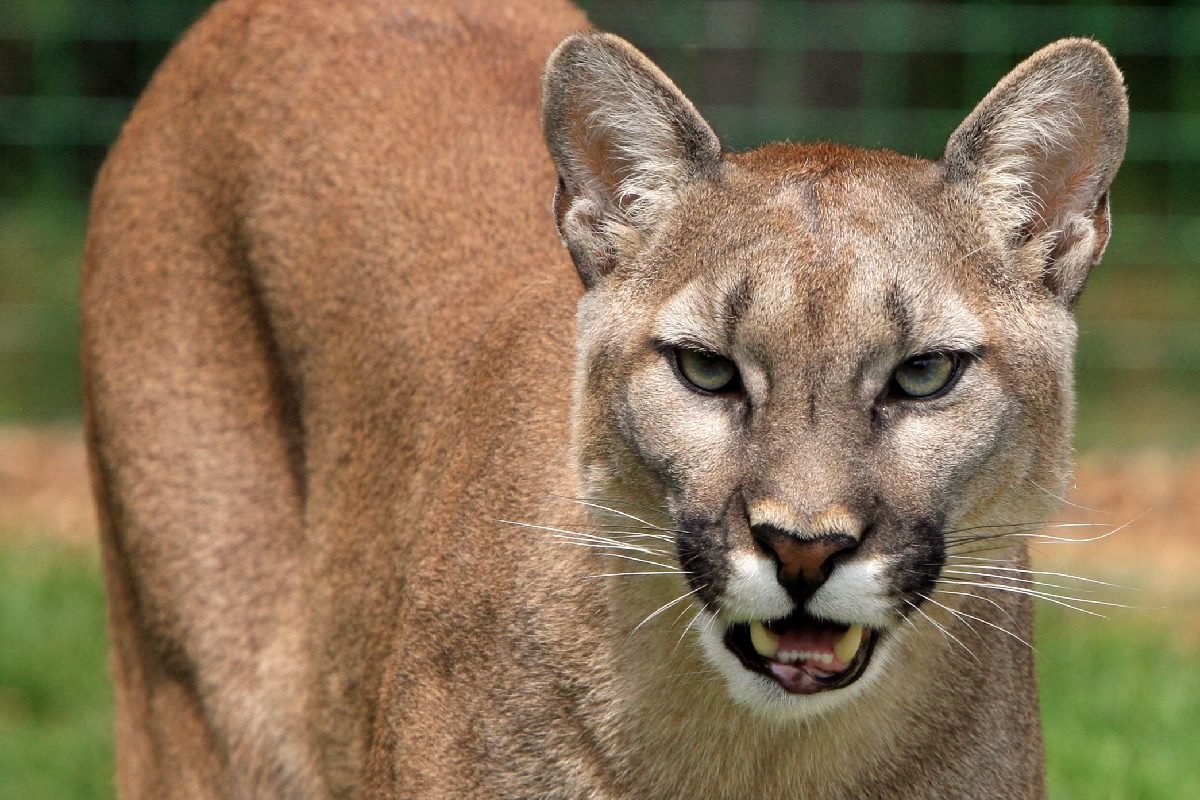
This is the sound that surprises people most. A chirp is short, high and startlingly birdlike — nothing about it suggests a predator that can take down an elk. Logan and Sweanor described cubs under six weeks old producing high-pitched, birdlike chirps and mews, and the call persists into adulthood as a contact signal between family members.
There is a good acoustic reason for the pitch. When P-22, the mountain lion who lived in Los Angeles’ Griffith Park, was recorded vocalising for the first and only time, researchers identified the call as a chirp or whistle and noted that its high pitch lets it travel well through wooded habitat. High-frequency sound cuts through vegetation that swallows a low growl.
The practical consequence. If a mountain lion is communicating near you, the most likely outcome is that you file it as a bird and carry on. That mismatch between what the animal sounds like and what people expect is probably why encounters go unregistered far more often than they go noticed.
3. The Mountain Lion Whistle
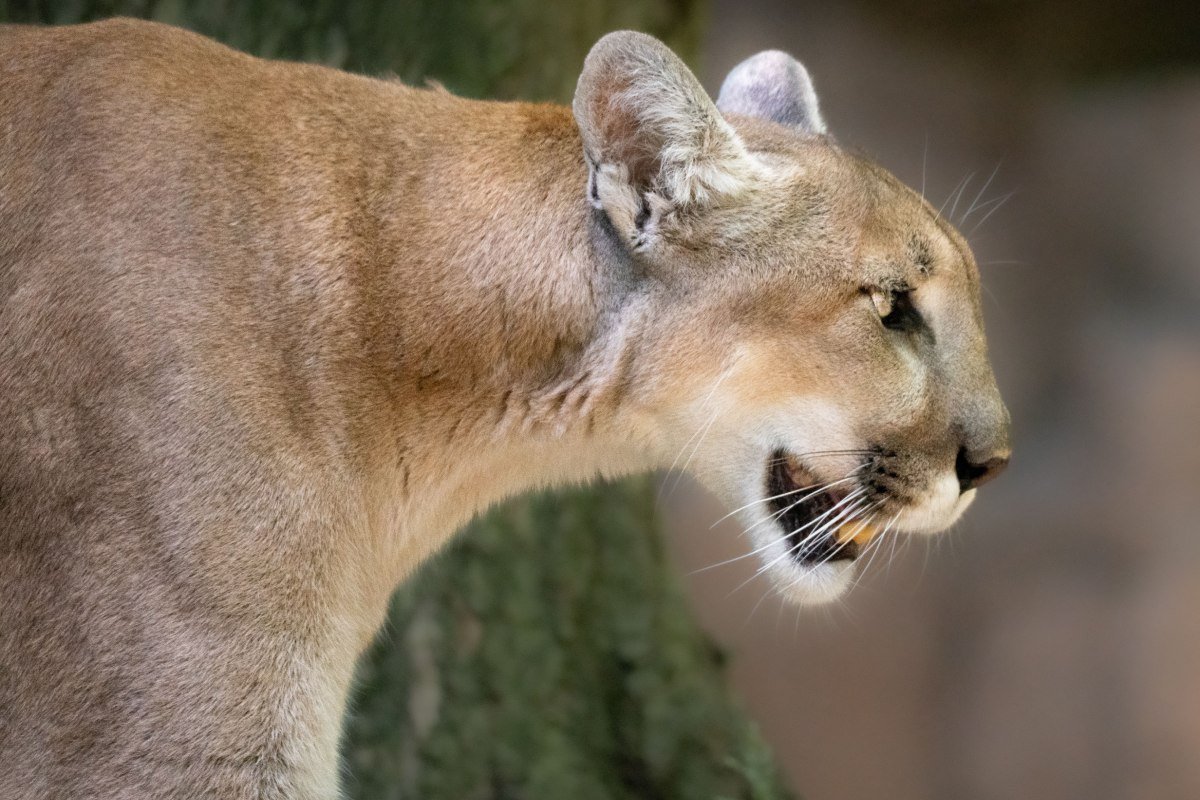
If you take one thing from this page, take this one. A whistling cat is not something the natural world offers often, and among North American mammals it is close to unique. Where a scream can plausibly be a fox, a bobcat, or a person, a whistle from a large cat has almost no competition.
The whistle is a long-distance version of the chirp: a sustained, high, pure tone built to carry across terrain. Logan and Sweanor heard whistles from family groups with older offspring. Whitaker separately described an alarm whistle given by a female signalling to her young, and by animals that had been chased up a tree — the same call doing double duty as a contact signal and a warning.
Chirp or whistle? The boundary between the two is not firm. The P-22 recording was described as a “chirp/whistle” precisely because it sat between the categories, and researchers working on puma communication have said openly that they are only scratching the surface and that pumas likely have considerably more call types than the handful usually listed. Treat chirp and whistle as two ends of one call rather than separate words.
4. The Mountain Lion Meow
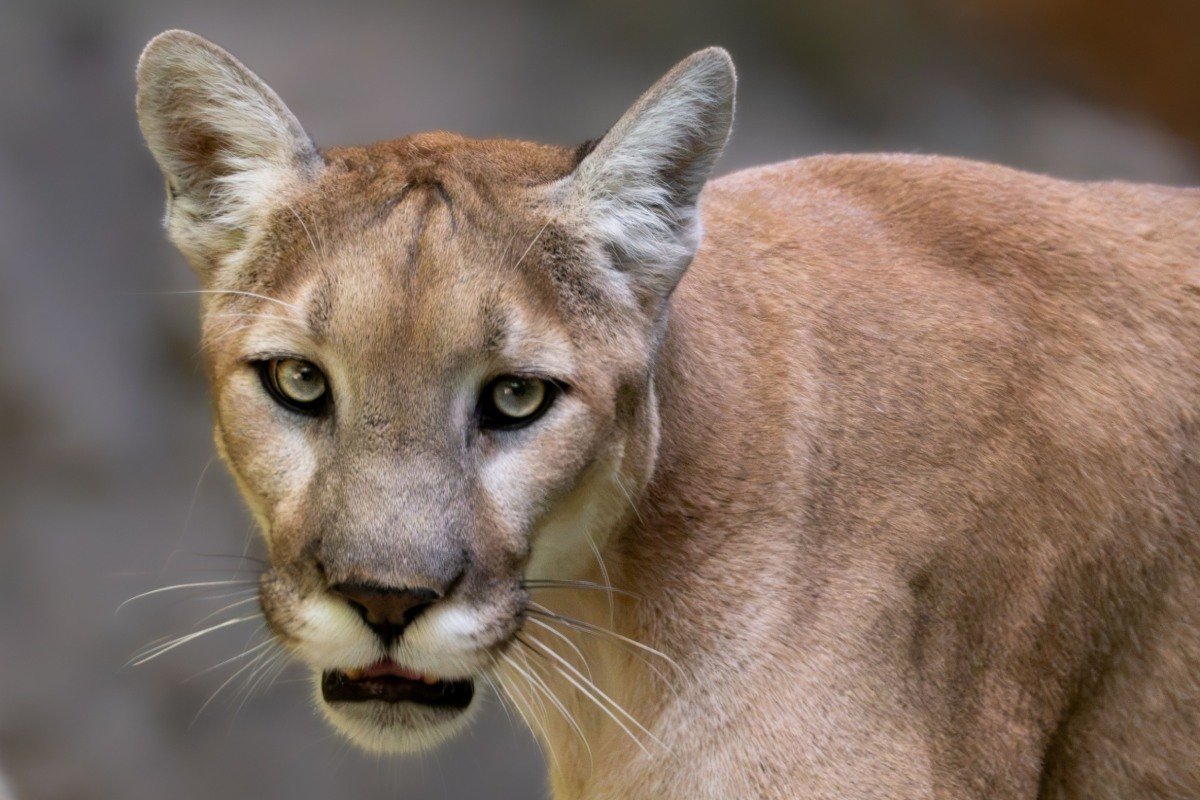
A mountain lion meow is instantly identifiable as a cat and instantly too large. The structure is familiar, the register is wrong, and the effect is faintly unsettling — a domestic sound arriving from an animal that weighs as much as you do.
Part of that is body size, and part of it is us. A 2025 acoustic comparison across felids found that domestic cat meows vary far more widely than those of wild relatives including the cougar — domestication loosened the call and reshaped it. Our reference point for “normal” is the modified version. We explore that story in more depth in the bobcat meow section.
Expect it only at close range, and mostly within a family group — a mother and her cubs, or animals in a captive setting where individuals live in proximity. Much of what is known about puma meowing comes from captive study for exactly that reason.
5. The Mountain Lion Growl
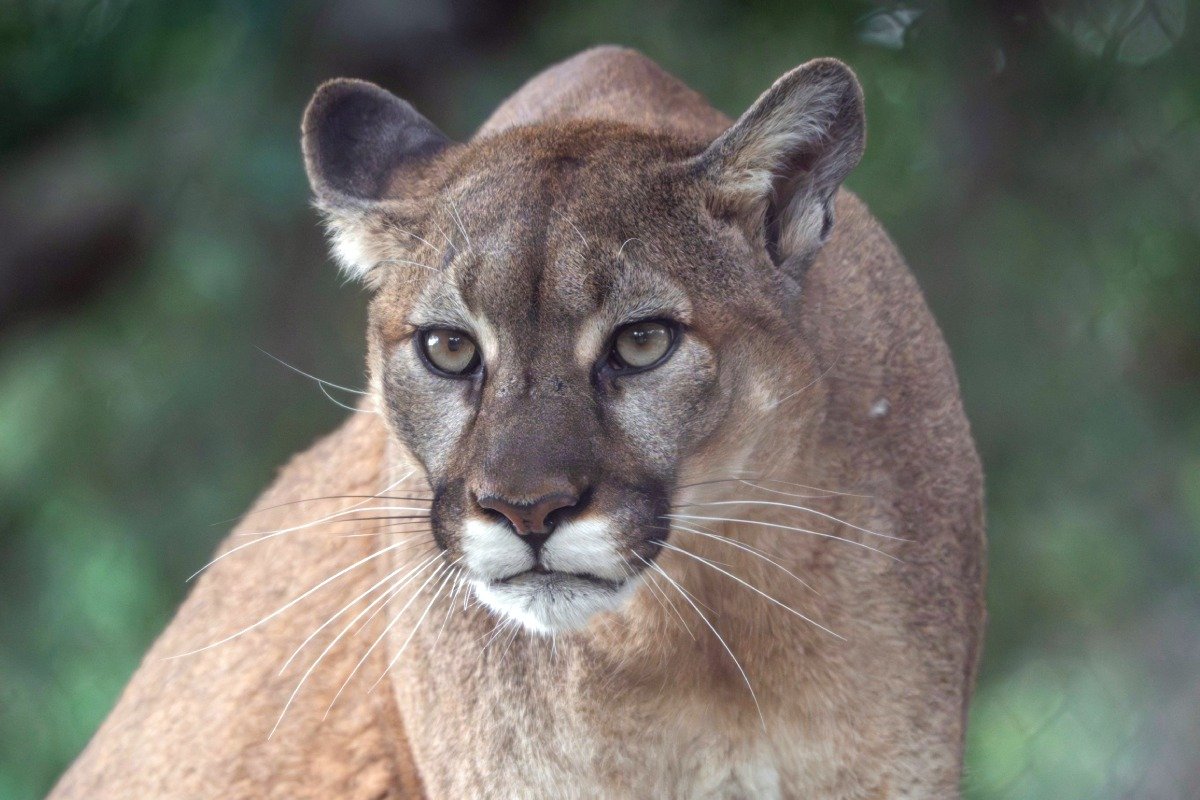
Low, sustained and deeply unpleasant to be on the receiving end of. Unlike the whistle, the growl is built for a range of a few metres — it is aimed at one recipient who is already too close. Typical triggers are a defended kill, a rival on a boundary, or cubs nearby.
Growl and hiss work as a graded pair rather than two separate messages — the same escalation ladder we describe for the bobcat. What matters is not which label fits but that the animal has moved from ignoring you to addressing you directly.
What it is not. A growl is not a hunting sound. Mountain lions are ambush predators and a stalking animal is silent — that is the entire strategy. Vocalising announces position, which is the opposite of what an ambush requires. If you can hear it, you have been noticed.
6. The Mountain Lion Hiss
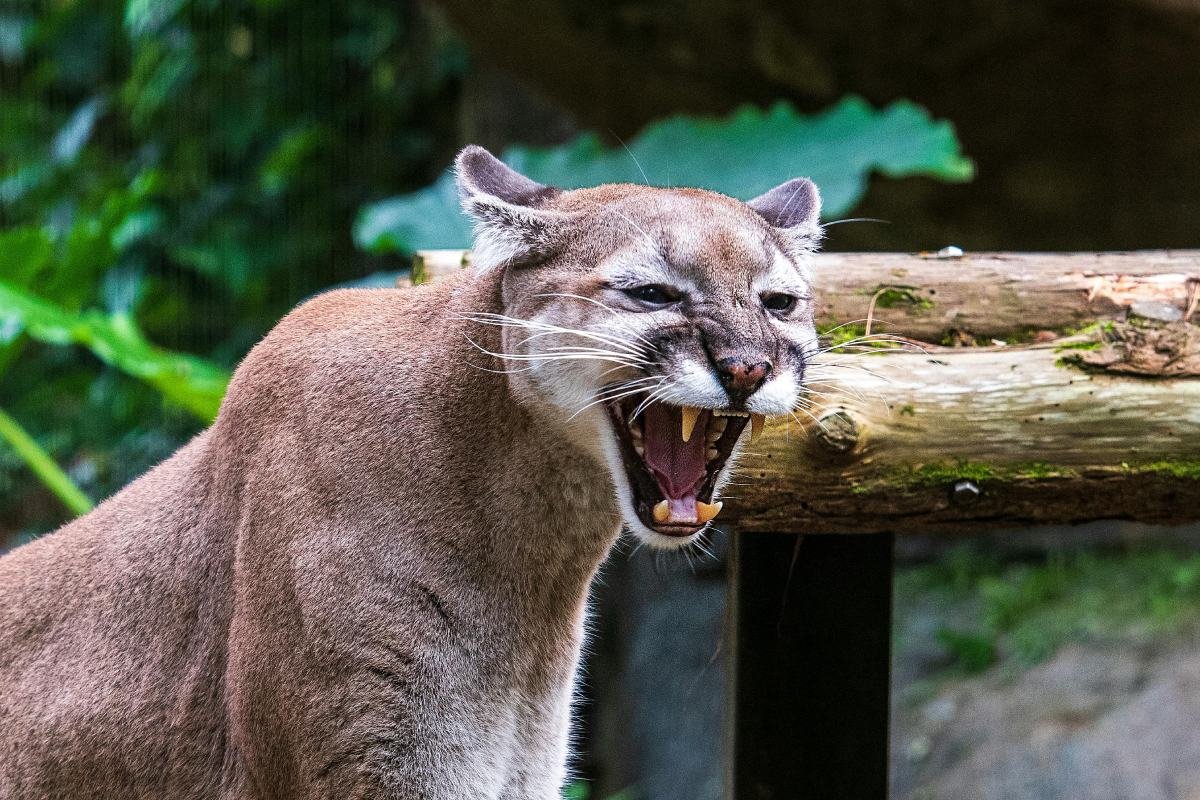
A hiss is a forceful expulsion of air with no tonal structure at all — broadband noise rather than a note, which is why it cuts through everything else at close range. Structurally it is identical to a house cat’s, scaled up.
The important point, and the one most often misread: a hiss is defensive, not offensive. It comes from an animal that feels cornered — treed by dogs, surprised at close quarters, or standing over cubs — and it is a demand for space rather than a prelude to attack. The posture confirms it: ears flat, body low, weight carried away from the threat rather than toward it.
The correct response is to give it an unobstructed route away from you and take a different one yourself — while facing it, staying upright, and not running.
7. The Mountain Lion Scream
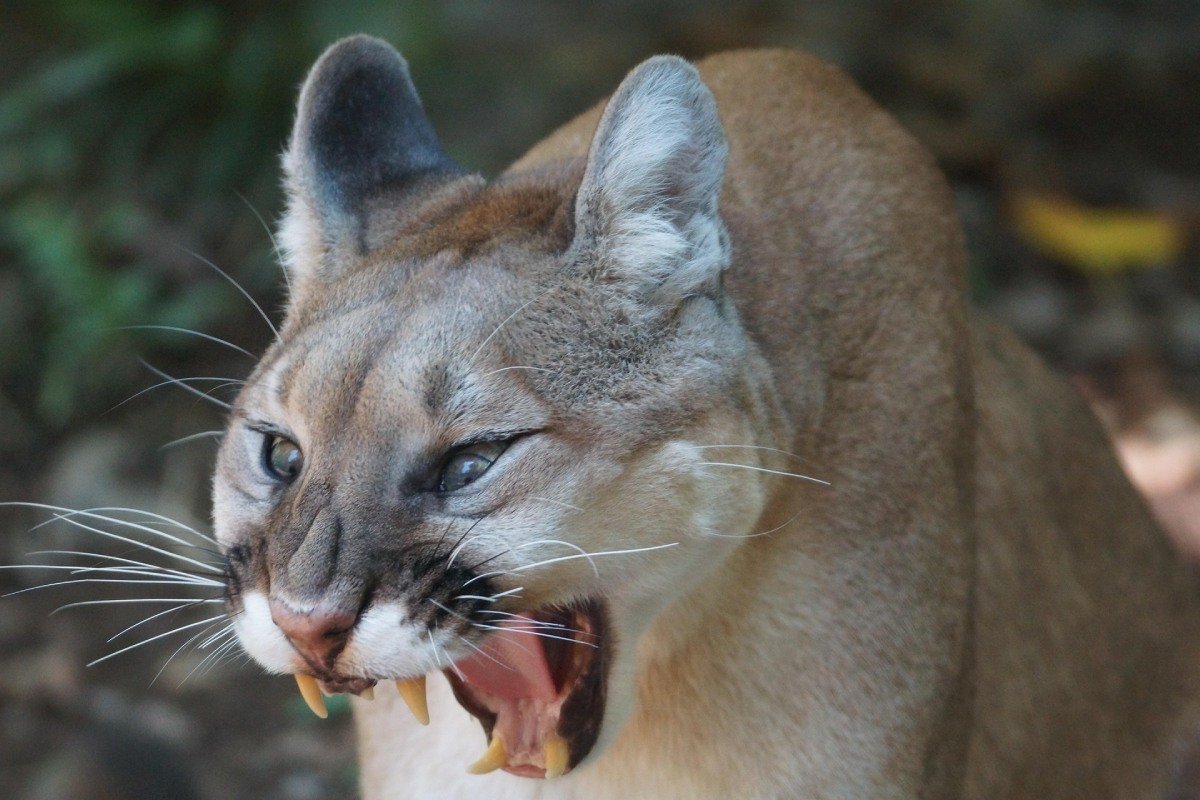
The scream deserves its reputation as a sound. It is loud, harsh, high and carries a long way, and people who hear it consistently describe it as a woman screaming. It has prompted emergency calls. That resemblance is not imagined — it lands in a pitch range and a rough, strained timbre that human hearing is specifically built to prioritise.
Functionally it belongs to mating. Females in oestrus scream to advertise availability across long distances; males scream less often, generally to announce presence to females and to rivals. It is not a hunting call, not a territorial roar, and not a sign that anything is being killed nearby.
It was probably something else. This is the sound with the widest gap between reputation and reality. Mountain lions scream infrequently, they are absent from most of the eastern United States, and the animals that produce similar screams are far more numerous. Before settling on this answer, read the next section — for a large share of readers the honest verdict is that it cannot have been a mountain lion.
Was It Really a Mountain Lion?
Before comparing sounds, compare geography — it settles more cases than acoustics do.
In 2018 the U.S. Fish and Wildlife Service formally declared the eastern puma extinct and removed it from the endangered species list, roughly eighty years after the last confirmed record. Cougars were officially recorded in the northeast only up to 1932 in New Brunswick and 1938 in Maine. Today the Florida panther is the only breeding puma population east of the Mississippi.
That does not mean an eastern mountain lion is impossible. Young males disperse extraordinary distances: a cougar killed by a car in Connecticut in 2011 had travelled some 1,500 miles from the Black Hills. But these are individual wanderers, not resident populations. Hundreds of eastern sightings are reported every year, and the overwhelming majority resolve to misidentification, escaped captive animals, or hoaxes — most commonly large bobcats, coyotes and domestic dogs.
The short version. West of the Rockies, a mountain lion is a reasonable first hypothesis. Across the Midwest, a dispersing male is possible but uncommon. East of the Mississippi and outside southern Florida, it is very unlikely — and a screaming animal there is far more probably a red fox or a bobcat.
| Animal | What gives it away |
|---|---|
| Mountain lion | Whistles and birdlike chirps alongside the scream. If you heard a clear whistle from something large, nothing else on this list does that. Screams are infrequent. |
| Bobcat | Long, wavering, rising and falling, often traded between two animals, and heavily concentrated in January to March. Far more numerous and far more widespread. |
| Red fox | Hoarse, short, repeated at regular intervals with clear gaps. The single most common source of “I heard a woman screaming” reports. |
| Coyote | A chorus — several overlapping voices mixing howls, yips and barks. If more than one animal answered, it was almost certainly this. |
For the two most likely alternatives, compare directly against our guides to bobcat sounds and coyote sounds, both of which have audio for every call.
When Are Mountain Lions Loudest?
Here mountain lions differ sharply from bobcats. Bobcat calling collapses into a tight late-winter window, so season alone is a strong diagnostic. Mountain lions have no comparably rigid breeding season — females can come into oestrus at various points in the year, and cubs are born across a broad spread of months. Season is therefore a much weaker clue than it is for bobcats.
Time of day is more useful. Mountain lions are most active at dusk and dawn, though they may move at any hour, and that is when contact calling between family members is most likely. The other reliable pattern is family structure: a female with dependent cubs is the most vocal mountain lion there is, because chirps, whistles and purrs all exist to keep a group in contact across broken country.
Frequently Asked Questions
Do mountain lions roar?
No. Despite their size, mountain lions belong to the purring branch of the cat family, and no cat both roars and purrs. What films present as a cougar roar is usually a lion or tiger dubbed over the footage. The real long-distance calls are the scream and the whistle.
Do mountain lions purr?
Yes, and they are the largest cat that does. Purring is recorded between mothers and nursing cubs at nursery sites. Like all purrs it is produced continuously across the whole breathing cycle rather than only on the outbreath, which is what distinguishes it mechanically from every other sound the animal makes.
Do mountain lions really scream like a woman?
The resemblance is real — the scream occupies a similar pitch range and rough timbre to a human distress cry, which human hearing is tuned to prioritise. But the sound is much rarer than its reputation suggests. The San Diego Zoo notes that mountain lions do not scream very often, and that whistles, growls, purrs and hisses are all more common.
What is a mountain lion whistle?
A sustained, high, pure tone used for long-distance contact and as an alarm signal, most often from a female to her offspring. It is the single most diagnostic mountain lion sound, because almost no other large North American mammal whistles. It grades into the shorter, birdlike chirp used at closer range.
Are there mountain lions in the eastern United States?
No breeding population, apart from the Florida panther. The U.S. Fish and Wildlife Service declared the eastern puma extinct in 2018, some eighty years after the last confirmed record. Individual young males do occasionally disperse east — one killed in Connecticut in 2011 had travelled around 1,500 miles — but hundreds of reported eastern sightings each year resolve overwhelmingly to misidentification, escaped captives or hoaxes.
Was that a mountain lion or a bobcat?
Bobcats are far more numerous and far more widespread, so they are the better first guess almost everywhere. A bobcat call is long and wavering, often exchanged between two animals, and clusters in January to March. A whistle or a birdlike chirp points to a mountain lion; nothing else on the shortlist produces those.
Is a screaming mountain lion dangerous?
A scream signals mating activity, not aggression toward people, and it is not a hunting sound — mountain lions ambush in silence, so a vocalising animal has already given up the element of surprise. The calls actually directed at a person are the close-range growl and hiss, which come from an animal that feels cornered or is guarding cubs.
Sources
- Potter, J. G. Acoustic analysis of vocalizations produced by captive mountain lions (Puma concolor).
- Logan, K. A., & Sweanor, L. L. (2001). Desert Puma: Evolutionary Ecology and Conservation of an Enduring Carnivore. Island Press.
- Currier, M. J. P. (1983). Puma concolor. Mammalian Species, 200, 1–7.
- Whitaker, J. O. (1997), on the puma alarm whistle — as reviewed in Potter (above).
- Peters, G. (2002). Purring and similar vocalizations in mammals. Mammal Review, 32(4), 245–271.
- (2025). Meows encode less individual information than purrs and show greater variability in domestic than in wild cats. Scientific Reports.
- Natural History Museum of Los Angeles County. The sound of our Griffith Park mountain lion: P-22 and the mysteries of puma communication.
- San Diego Zoo Wildlife Alliance. Mountain lion (puma, cougar).
- U.S. Fish and Wildlife Service (2018). Removal of the eastern puma from the Federal List of Endangered and Threatened Wildlife. Federal Register. Coverage: National Geographic, Audubon.
- Library of Congress. Why and how do cats purr?
Much of what is known about puma vocalizations comes from captive animals and from field observations at nursery sites, rather than from systematic acoustic recording of wild adults. Researchers working on puma communication have said openly that the repertoire is probably larger than the handful of call types usually described.